


Key Takeaways |
Hope có thể là động từ hoặc danh từ, mang nghĩa hy vọng, mong đợi hoặc mong muốn một điều tích cực xảy ra. Khi là động từ, hope thường diễn tả một điều có khả năng xảy ra, khác với wish vốn thường dùng cho điều không thực tế hoặc trái với hiện tại. Các cấu trúc quan trọng với Hope gồm: hope + to V, hope + that + S + V và hope for + noun/noun phrase. Đây là ba dạng bạn nên nắm chắc để dùng tự nhiên trong IELTS Speaking và Writing. Hope đi với một số giới từ phổ biến như for, of, against hoặc xuất hiện trong cụm in the hope of. Hope, Wish, Expect và Look forward to không dùng giống nhau. Hope nói về điều có thể xảy ra Wish thường nói về điều không thật hoặc tiếc nuối Expect mang nghĩa kỳ vọng có cơ sở Look forward to diễn tả sự háo hức và luôn đi với V-ing. Trong IELTS Speaking, cấu trúc hope rất hữu ích khi nói về mục tiêu, kế hoạch tương lai hoặc kỳ vọng cá nhân. Trong IELTS Writing, bạn nên dùng hope theo văn phong trang trọng hơn, chẳng hạn như It is hoped that... hoặc kết hợp với các từ thay thế như anticipate, aspire to, be optimistic about .. |
Hope to V hay V-ing là một trong những chủ điểm ngữ pháp khá phổ biến với người học tiếng Anh, đặc biệt là những bạn đang luyện thi IELTS. Dù “hope” là một từ quen thuộc, không ít bạn vẫn còn băn khoăn không biết nên dùng động từ nguyên mẫu có to hay dạng V-ing phía sau. Vì chỉ một lỗi nhỏ trong cấu trúc cũng có thể khiến câu văn trở nên thiếu tự nhiên hoặc mất điểm trong bài thi Speaking và Writing.
Trong bài viết này, IDP sẽ giúp bạn giải đáp rõ câu hỏi hope đi với to V hay V-ing, đồng thời hệ thống đầy đủ về cấu trúc của Hope, những lỗi thường gặp, ví dụ thực tế và cách áp dụng trong bài thi IELTS.
Sẵn sàng chinh phục kỳ thi IELTS cùng IDP với nhiều ưu đãi hấp dẫn.
1. Hope nghĩa là gì trong tiếng Anh?
Hope là một từ rất phổ biến trong tiếng Anh, mang nghĩa là hy vọng, mong đợi hoặc mong muốn một điều tích cực sẽ xảy ra trong hiện tại hoặc tương lai. Từ này có thể được dùng như động từ (verb) hoặc danh từ (noun) tùy vào ngữ cảnh.
Danh từ (Noun): Ở dạng danh từ, Hope chỉ sự kỳ vọng hoặc lý do để tin rằng điều tốt đẹp sẽ đến. Danh từ này thường đi với các cụm như have hope, give hope, lose hope, a ray of hope..
Ví dụ: She never lost hope, even in the darkest times.
Động từ (Verb): Khi đóng vai trò là động từ, Hope diễn đạt mong muốn, kỳ vọng vào một điều tích cực có khả năng xảy ra. Khác với Wish (dùng cho điều không thực tế hoặc trái với thực tại), Hope hàm ý điều đó hoàn toàn có thể xảy ra.
Ví dụ: I hope to improve my IELTS score.
2. Hope + gì? Cấu trúc Hope trong tiếng Anh
Khi học cấu trúc Hope, câu hỏi các bạn thường băn khoăn nhất là: Sau Hope là to V hay V-ing? Bạn hãy ghi nhớ một nguyên tắc: Hope luôn đi với to V, không bao giờ đi với V-ing. Tuy nhiên, để sử dụng Hope một cách linh hoạt và chính xác trong mọi ngữ cảnh, bạn cũng cần xem xét cấu trúc này dưới các góc độ thời gian khác nhau: hiện tại, tương lai và quá khứ.
2.1. Cấu trúc chung của Hope
Trong tiếng Anh, theo sau động từ Hope luôn luôn là một động từ nguyên mẫu có to (to-infinitive) để diễn tả một mong muốn hoặc dự định thực hiện một hành động nào đó của chủ thể.
S + hope + to + V-inf + O
S + hope (that) + S + V
Ví dụ:
She hopes to study abroad next year.
I hope to achieve an 8.0 band score in IELTS Speaking.
2.2. Cấu trúc Hope diễn tả hy vọng cho hiện tại
Cấu trúc Hope diễn tả mong muốn ở hiện tại thường áp dụng thì hiện tại đơn hoặc hiện tại tiếp diễn, tùy theo mức độ chủ động của người nói.
S + hope (that) + S + V(s/es)
S + hope (that) + S + am/ is/ are + V-ing
Ví dụ:
She hopes her parents understand her decision.
I hope that you are enjoying your stay in London.
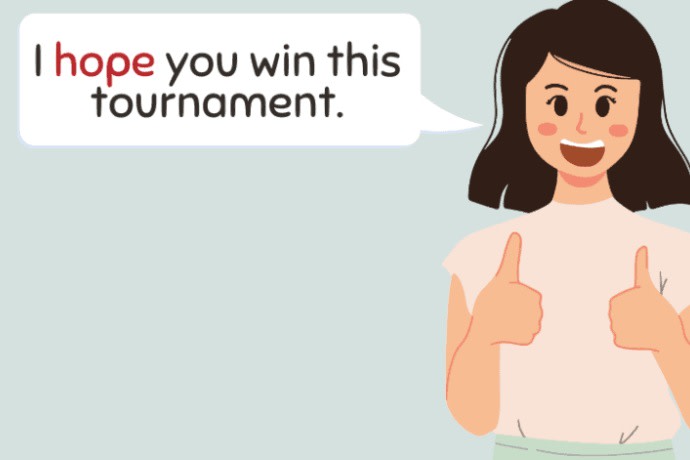
Hướng dẫn cách sử dụng hope to V hay V-ing giúp tránh nhầm lẫn ngữ pháp cơ bản.
3. Hope đi với giới từ gì trong tiếng Anh?
Trong tiếng Anh, Hope thường được biết đến nhiều nhất với cấu trúc đi kèm động từ (To V hoặc mệnh đề). Tuy nhiên, khi đóng vai trò là một danh từ hoặc khi cần kết nối với một đối tượng cụ thể, Hope sẽ đi kèm với các giới từ nhất định. Mỗi giới từ sẽ mang một sắc thái nghĩa và cách dùng khác nhau. Dưới đây là những giới từ phổ biến thường đi với hope:
Cấu trúc | Ý nghĩa | Ví dụ |
Hope for + N/V-ing | Diễn tả sự kỳ vọng hoặc mong chờ một kết quả tích cực, thường là điều tốt đẹp chưa chắc chắn. | She never gave up hope for a better future. |
Hope of + N/V-ing | Dùng để chỉ khả năng hoặc cơ hội đạt được điều gì đó, thường xuất hiện trong văn phong trang trọng hoặc học thuật. | There is little hope of reaching an agreement before the deadline. |
In the hope of / In hopes of | Dùng để nói về sự tiếc nuối đối với một sự việc hoặc kết quả không mong muốn. | He spent months practicing in the hope of improving his speaking fluency. |
Hope against + N | Dùng trong cụm cố định hope against hope, diễn tả sự hy vọng dù biết khả năng xảy ra rất thấp, hy vọng mong manh. | The rescue team is hoping against hope that they will find survivors. |
4. Phân biệt giữa cấu trúc Wish, Expect và Look forward to
Trong bài thi IELTS, việc sử dụng các từ có nét nghĩa tương đồng là cách tuyệt vời để tăng điểm Lexical Resource. Tuy nhiên, Wish, Expect và Look forward to lại có cách dùng và sắc thái rất khác biệt so với Hope. Dưới đây là bảng phân biệt chi tiết giúp bạn sử dụng chính xác những cấu trúc này trong mọi ngữ cảnh.
4.1. Cấu trúc Hope và Wish
Đây là cặp từ bị nhầm lẫn nhiều nhất, vì cả hai đều mang nghĩa hy vọng, ước muốn trong tiếng Việt. Tuy nhiên, điểm khác biệt cốt lõi nằm ở khả năng xảy ra của hành động.
| Hope | Wish |
Khả năng xảy ra | Dùng cho những điều có thể xảy ra hoặc khả thi ở hiện tại và tương lai. | Dùng cho những điều không có thật, trái ngược với thực tế hoặc rất khó xảy ra. |
Thì sau động từ | Hiện tại / Tương lai thường | Quá khứ (lùi thì) hoặc Would |
Cảm xúc | Lạc quan, kỳ vọng tích cực | Tiếc nuối, khao khát điều không thể |
Ví dụ | I hope it rains tomorrow. | I wish I had passed the test. |
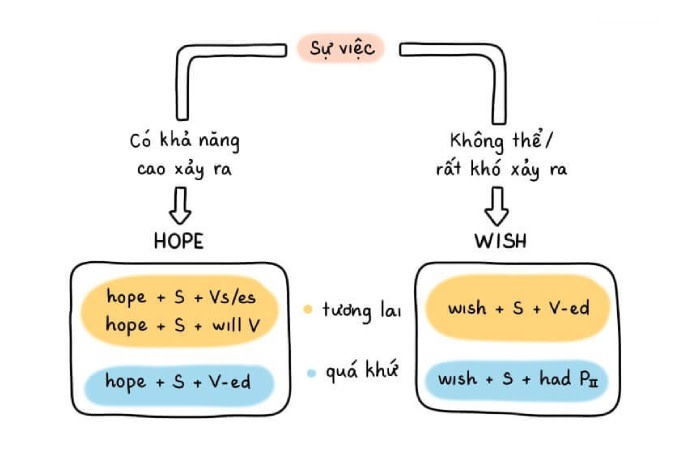
Trong trường hợp nào “hope” đi với “to V” hoặc “V-ing”?
4.2. Cấu trúc Hope và Expect
Hope và Expect đều nói về sự mong đợi trong tương lai, nhưng mức độ chắc chắn và tính chất cảm xúc có sự khác nhau.
| Hope | Expect |
Mức độ chắc chắn | Nhấn mạnh vào mong muốn chủ quan của người nói (có thể xảy ra hoặc không). | Nhấn mạnh vào tin tưởng hoặc chắc chắn rằng điều đó sẽ xảy ra dựa trên lý trí/dấu hiệu. |
Cơ sở | Luôn mang tính tích cực, mong muốn | Dựa trên bằng chứng, lý lẽ, kinh nghiệm |
Cảm xúc | Lạc quan, kỳ vọng tích cực | Tiếc nuối, khao khát điều không thể |
Ví dụ | I hope that he arrives on time. | I expect him to arrive on time. |
4.3. Cấu trúc Hope và Look forward to
Đây là một điểm ngữ pháp thường khiến nhiều thí sinh mất điểm trong IELTS, đặc biệt ở phần Writing Task 1 (Letter) và Speaking.
| Hope | Look forward to |
Ý nghĩa | Diễn tả mong muốn chung chung, có thể dùng trong cả ngữ cảnh thân mật và trang trọng. | Diễn tả sự háo hức, mong đợi một sự việc chắc chắn sẽ diễn ra với thái độ tích cực. |
Cấu trúc | Hope + to V. | Look forward to + V-ing/Noun (Lưu ý: Luôn là V-ing). |
Cảm xúc | Trung tính, thể hiện sự mong muốn đơn thuần | Mang cảm xúc háo hức, hân hoan rõ rệt hơn |
Ví dụ | I hope the matter will be resolved promptly. | I look forward to hearing from you. |
5. Synonyms/phrases for Hope in English
During the test, repeating the word Hope too much can make the sentence monotonous and unnatural, especially in Speaking and Writing. Therefore, using synonyms or phrases not only helps you express yourself more flexibly, but also better demonstrates your ability to use academic vocabulary, which is a very important element in the IELTS Lexical Resource criteria.
Here are common words/phrases that can replace Hope in a variety of contexts:
Words/Phrases | Meaning | Example |
Anticipate | Predict or expect what will happen. | Experts anticipate significant changes in technology. |
A ray of hope (Idiom) | A ray of hope (used when the situation is difficult) | The new vaccine brought a ray of hope to the world. |
Aspire to | A desire or desire to achieve something great. | Many students aspire to study at top universities. |
Be optimistic about | Emphasis is placed on an optimistic attitude. | He is optimistic about the organization's future. |
Dream of / Dream about | Dreaming about something. | He dreams of becoming a pilot someday. |
6. Applying the Hope structure in the IELTS test
The Hope structure seems simple, but if you know how to use it flexibly, you can express your desires, expectations and feelings more naturally. This is also a way to help the answers in IELTS Academic Speaking and Writing become clearer, more nuanced and more persuasive.
6.1. Application in IELTS Speaking Part 1
In IELTS Speaking, especially in Part 2 and Part 3, you will encounter topics that require you to talk about your dreams, personal expectations, and views on the future. You can use the Hope + to V structure to talk about short-term goals naturally.
Question: Do you have any plans for the future?
Answer: Yes, I hope to pursue a master's degree abroad within the next two years. Honestly, I hope that the scholarship application I submitted last month will work out — it would be a huge opportunity for me..
6.2. Application in IELTS Speaking Part 2 (Cue Card)
Cue card: Describe a goal you hope to achieve in the future.
Answer: One goal I truly hope to achieve is becoming fluent in Japanese. I've been studying it for about a year now, and I hope thatby the time I turn 30, I will
be confident enough to travel through Japan without any language barrier. There's still a long way to go, but I hope for steady progress every single month. Some days feel frustrating, and honestly, I find myself hoping against hope
when I forget vocabulary I've studied dozens of times — but I refuse to give up.
6.3. Application in IELTS Speaking Part 3 (Social and Academic Questions)
Question: Do you think young people today are optimistic about the future?
Answer: I think it's a mixed picture, honestly. Many young people
hope for a fairer society — better job opportunities, cleaner environments, more affordable housing. But at the same time, there's a growing sense that hope of achieving those things is becoming harder to hold onto, especially with rising living costs and climate anxiety. Personally, I still hope that governments and corporations will step up before it's too late.
6.4. Applications in IELTS Writing
In IELTS Writing, the structure of Hope with to V appears in both Task 1 and Task 2, but the style needs to be adjusted to be more formal and objective than Speaking.
Topic: Many cities are facing serious environmental problems. What can be done to address this issue?
Answer: It is widely hoped that renewable energy adoption will
accelerate in the coming decade, reducing urban pollution significantly. While progress has been made, the hope of eliminating carbon emissions entirely within a single generation remains ambitious. Governments and citizens alike
hope for a future in which clean air and sustainable infrastructure are not privileges, but universal standards.
7. Bài tập áp dụng cấu trúc Hope to V (có đáp án
Bài tập 1: Điền dạng đúng của động từ trong ngoặc để hoàn thành các câu sau (Hope + to V).
1. I hope …………………. (get) a high score in the IELTS Reading test next week.
2. They are hoping for …………………. (win) the first prize in the debate competition.
3. We hope that the weather …………………. (be) fine for our graduation ceremony tomorrow.
4. She hopes …………………. (find) a part-time job when she moves to Melbourne.
5. I hope that you …………………. (have) a great time at the party last night.
6. My parents hope …………………. (see) me graduate from university with honors.
7. It is hoped that the government …………………. (implement) new policies to support students.
8. We were hoping…………………. (meet) the professor, but he was busy.
9. I hope my friend …………………. (arrive) safely at the airport right now.
10. Many people hope …………………. (reduce) their carbon footprint to protect the environment.
Bài tập 2: Viết lại câu sao cho giữ nguyên nghĩa bằng cách sử dụng cấu trúc Hope
1. I want to improve my writing skills.
→ I hope ………………….………………….………………….………………….………
2. She wants to study overseas.
→ She hopes ………………….………………….………………….………………….…
3. They want to get band 7.0 in IELTS.
→ They hope ………………….………………….………………….………………….…
4. We want to travel around the world.
→ We hope ………………….………………….………………….………………….…...
5. He wants to become an engineer.
→ He hopes ………………….………………….………………….………………….…...
6. I want to speak English fluently.
→ I hope ………………….………………….………………….………………….…....…..
7. My parents want to move to a bigger house.
→ My parents hope ………………….………………….………………….………………
8. She wants to find a better job.
→ She hopes ………………….………………….………………….………………………
9. They want to improve their communication skills.
→ They hope ………………….………………….………………….………………………
10. We want to receive better opportunities.
→ We hope ………………….………………….………………….…………………………
Đáp án:
Bài tập 1: Điền dạng đúng của động từ trong ngoặc để hoàn thành các câu sau (Hope + to V).
1. to get 2. winning 3. will be / is 4. to find 5. had | 6. to see 7. will implement / implements 8. to meet 9. is arriving 10. to reduce |
Bài tập 2: Viết lại câu sao cho giữ nguyên nghĩa bằng cách sử dụng cấu trúc Hope
1. I hope to improve my writing skills.
2. She hopes to study overseas.
3. They hope to get band 7.0 in IELTS.
4. We hope to travel around the world.
5. He hopes to become an engineer.
6. I hope to speak English fluently.
7. My parents hope to move to a bigger house.
8. She hopes to find a better job.
9. They hope to improve their communication skills.
10. We hope to receive better opportunities.
Answer:
Exercise 1: Fill in the correct form of the verb in parentheses to complete the following sentences (Hope + to V).
1. To get 2. Winning 3. will be/is 4. to find 5. HAD | 6. To see 7. will implement / implements 8. to meet 9. is arriving 10. to reduce |
Exercise 2: Rewrite the sentence so that it retains its meaning using the Hope structure
1. I hope to improve my writing skills.
2. She hopes to study overseas.
3. They hope to get band 7.0 in IELTS.
4. We hope to travel around the world.
5. He hopes to become an engineer.
6. I hope to speak English fluently.
7. My parents hope to move to a bigger house.
8. She hopes to find a better job.
9. They hope to improve their communication skills.
10. We hope to receive better opportunities.
Ready to use a more accurate Hope structure in IELTS?
Mastering the Hope to V or V-ing structure will not only help you avoid basic grammar mistakes, but it will also help the expressions in IELTS Speaking and Writing become more natural and clear. When you know how to use the right hope + to V or hope + clause structure, it will be easier for you to talk about your goals, expectations and future plans more coherently in the test. These are both simple but very useful structures in both Speaking and Writing.
In addition to building a solid grammar and vocabulary foundation, choosing a reputable test organizer is also an important step in the journey to conquer IELTS. IDP is the co-owner of the global IELTS test, bringing a modern test system and a transparent assessment process according to international standards.
When you register for IELTS at IDP, you can:
Easily find out the latest IELTS test fees, choose an IELTS test location
and test time that suits your study plan
Experience IELTS practice tests to assess your current level and familiarize yourself with the test structure before entering the official test.
Choose to retake the 1 skill test (One Skill Retake) if you have not achieved the desired score.
Book your IELTS test with IDP today to choose the right test date and get dedicated support from our team of IELTS experts.