


Short Answer Question is one of the most popular and important types of questions in the IELTS Reading test. To achieve a high score in this test, you need to understand the test-taking strategies, the rules of the test as well as be careful throughout the test.
The following article will give you an overview of the Short Answer Question type in the IELTS Reading test, test-taking strategies and tips to help you achieve the highest score!
1. Overview of the Short Answer Question Type
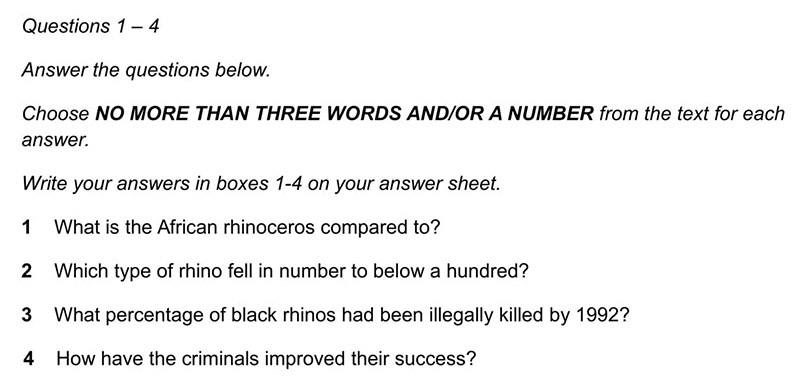
Short Answer Questions require candidates to respond using words or short phrases taken directly from the reading passage, with answers limited by word count. This format resembles a fill-in-the-blank task.
Typical instructions include:
ONE WORD ONLY from the passage
NO MORE THAN THREE WORDS AND/OR A NUMBER
NO MORE THAN THREE WORDS FOR EACH ANSWER
If the instructions include “from the passage”, you must use the exact phrasing from the text—no paraphrasing, synonyms, or altered word forms are allowed.
2. Step-by-Step Approach to Short Answer Questions
Step 1: Read Instructions Carefully
Note the exact word limit and whether numbers count as words. For example, “25 October” counts as two words (number + word).
Step 2: Identify Keywords in the Question
Underline changeable keywords (concepts that may be paraphrased) and unchangeable keywords (proper nouns, dates, numbers). For instance, in the question “Which part provided shade for people?”, keywords include “Which part” and “provided shade.”
Step 3: Skim the Passage
Skim each paragraph quickly to understand its main idea—often found in the topic sentence. This helps locate sections most relevant to the question.
Step 4: Locate the Answer Paragraph
Use your underlined keywords to narrow down which paragraph contains the answer. Remember that questions follow the text’s order—if question 2 relates to a paragraph before question 1, respond accordingly.
Step 5: Write and Verify Your Answer
Enter your answer within the allowed word limit. After completing all items, double-check that each answer matches both the passage wording and the instructions.
3. Common Pitfalls and Tips for Success
Common Mistakes:
Failing to recognize paraphrased keywords
Exceeding the specified word limit and losing marks
Overreading the entire passage instead of focusing on keywords
Top Tips:
Answers appear in the same sequence as questions in the text
Read the question first, then skim to find relevant visuals or topic sentences
Do not use personal opinion—answers must come from the passage only
4. Sample Practice with Answers
A short passage about chimpanzee culture is followed by these example questions:
Questions 23–26 (Each answer uses no more than three words or a number taken directly from the text.)
When did the unexpected discoveries occur?
Which country hosted Nishida and Goodall’s research?
What did chimpanzees become accustomed to in the initial study?
Which term did Jane Goodall use in 1973 to describe tool use variation?
Answer Key: 23. in the 1960s 24. Tanzania 25. close observation 26. cultural origin
Consistent practice with question types like summary completion, matching headings, gap fill, and multiple choice is essential. Try Short Answer Question exercises daily, check your replies carefully against the text, and track your accuracy. The more you practice, the better you become at spotting answer locations and following instructions precisely.
When you’re ready, explore comprehensive IELTS resources, webinars, and courses, and consider registering for an official IELTS test with IDP. You’ve got the strategy—now take the next step toward your highest score!