



Matching Sentence Endings is one of the tasks in the IELTS Reading test. Although this question type does not appear frequently, it is important to understand the format and practice your skills to be ready to score high at any time.
This article provides an overview of the Matching Sentence Endings question type, along with techniques and useful tips to help you avoid unnecessary mistakes.
1. Overview of the Matching Sentence Endings Question
In this task, you are given a list of sentence beginnings (incomplete sentences) and a separate list of possible endings. Your job is to connect the correct sentence halves based on information from the reading passage. The goal is to test your ability to understand meaning and match ideas within the text.
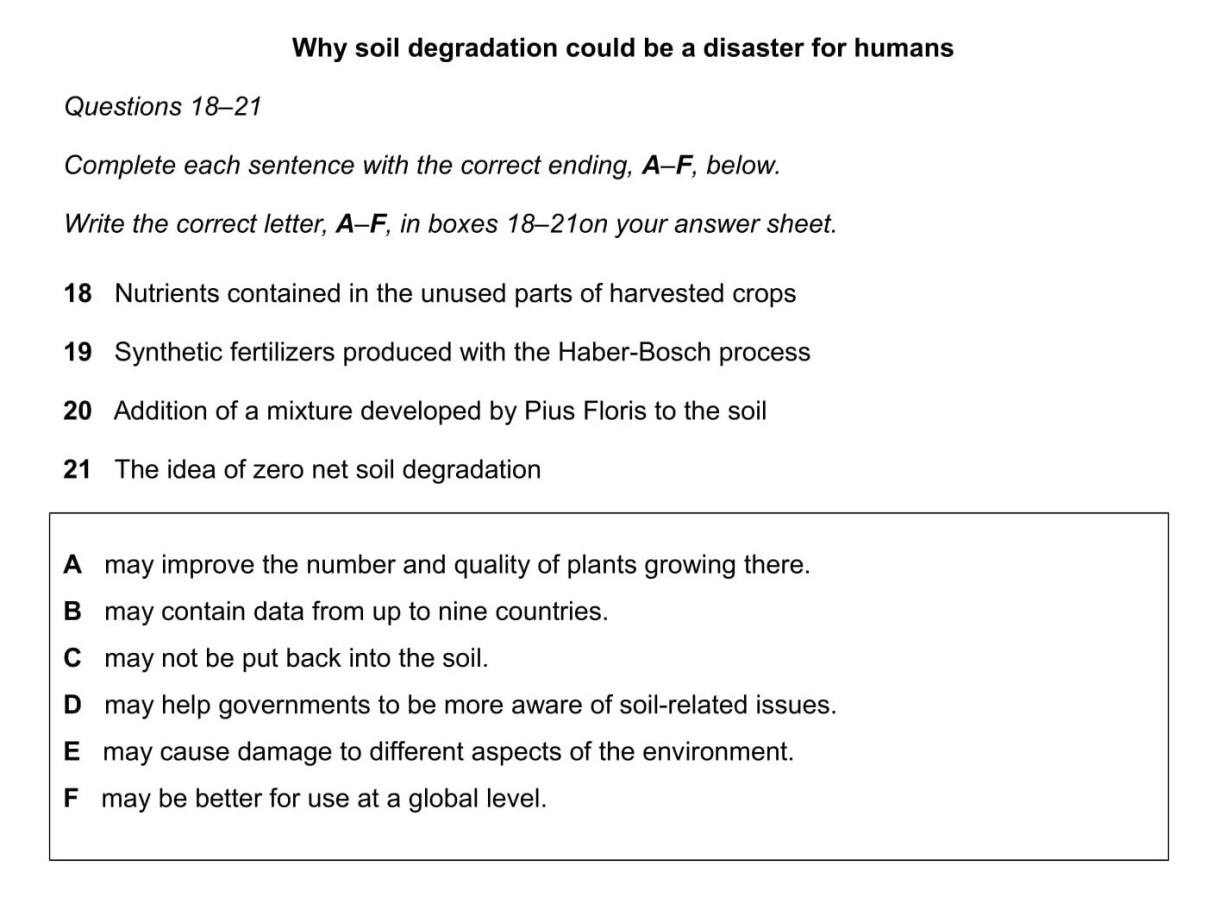
Typical format of Matching Sentence Endings in IELTS Reading:
Matching Sentence Endings
2. Steps to Complete Matching Sentence Endings Effectively
If you are looking for a proven method to tackle this task successfully, follow these steps:
Step 1: Read the questions carefully and underline keywords
Begin by reading the list of sentence beginnings only. Highlight key terms that help identify the context of each sentence. You do not need to read the endings yet—focus only on understanding the meaning of the beginnings.
Step 2: Identify related keywords in the passage
Use skimming to get an overview of the text and scanning to find specific information related to the keywords. Note that keywords may be paraphrased in the text.
Step 3: Compare and match sentence endings
Review the list of endings and determine which one logically and grammatically completes each sentence. Cross out used endings to avoid confusion with remaining questions.
3. Tips for Matching Sentence Endings Questions
Common mistakes to avoid:
Matching based only on meaning or grammar without reading the text. This may seem like a time-saving shortcut, but IELTS Reading is designed to test comprehension of the passage, not grammar rules alone.
Focusing only on keywords in the sentence beginnings. Remember that the text may use paraphrased expressions and synonyms, not the exact keywords.
Finding the correct keyword but ignoring the context, making it harder to match the sentence accurately.
Useful tips:
Answers follow the same order as the passage.
Read the instructions and all sentence beginnings before reviewing the full passage or endings.
Look for synonyms and paraphrased phrases that connect to the keywords.
The first few questions are often the hardest—manage your time wisely.
If the sentence beginning and ending do not match grammatically, the answer is likely incorrect.
4. Matching Sentence Endings Practice Exercise
Title: Why Fairy Tales Are Really Scary Tales
Questions 27-31 Complete each sentence with the correct ending, A–F, below. Write the correct letter, A–F, in boxes 27–31 on your answer sheet.
Sentence beginnings:
In fairy tales, details of the plot
Tehrani rejects the idea that the useful lessons for life in fairy tales
Various theories about the social significance of fairy tales
Insights into the development of fairy tales
All the fairy tales analysed by Tehrani
Endings:
A. may be provided through methods used in biological research B. are the reason for their survival C. show considerable global variation D. contain animals which transform to become humans E. were originally spoken rather than written F. have been developed without factual basis
Answers:
C
B
F
A
E
We hope this article has equipped you with essential strategies and insights to confidently tackle the Matching Sentence Endings task in the IELTS Reading test. However, consistent practice is still key to becoming familiar with the test format and improving your response speed.
If you're preparing for the IELTS test at home, explore IDP's full range of IELTS resources to get familiar with the test structure and aim for your highest possible score. Our materials include Masterclass webinars, IELTS preparation courses, and expert tips from international IELTS professionals.
Register for your IELTS test with IDP today and take the next step in your English journey.